


17 Sep 4MP Or 8MP: What Camera Resolution Means For You
4MP vs. 8MP: What Different Camera Resolutions Mean and How to Choose the One That’s Right for You
When shopping for a security camera, you’ll see terms like 4MP, 8MP, 2K, and 4K. These terms refer to the camera’s resolution, or the number of pixels used to create an image. The higher the pixel count, the greater the detail captured in the video footage.
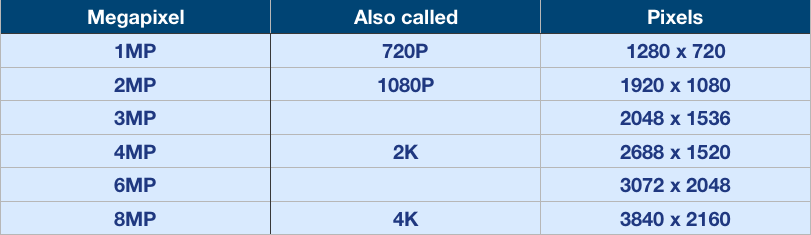
One megapixel (MP) is equal to one million pixels. So a 4MP camera has four million pixels and an 8MP camera has eight million. As for the 2K and 4K terms, those refer to the horizontal pixel count. A 2K camera has approximately 2,000 pixels horizontally, while a 4K camera has 4,000, which equate roughly to 4MP and 8MP respectively. So a 2K camera and a 4MP camera are the same thing, while a 4K camera and an 8MP camera are the same (also referred to as Ultra High Definition, or UHD).
How high of a resolution do you need for your security camera? This guide will help you understand the differences between 4MP and 8MP security cameras so you can make an informed decision and choose the right one for your home or business.
Quick Comparison: 4MP vs. 8MP Cameras
Here is a quick overview of the key differences between 4MP and 8MP cameras.
| Feature | 4MP (2K) Camera | 8MP (4K / UHD) Camera |
| Resolution | 2560 x 1440 pixels | 3840 x 2160 pixels |
| Image Quality | Excellent detail, twice the resolution of 1080p HD | Unparalleled clarity, four times the resolution of 1080p HD |
| Recommended Use | General surveillance for small to medium areas, such as a home entrance or small retail shop | High-detail surveillance for large areas or when specific details like license plates and faces are critical |
| Field of View | Wide field of view | Wider field of view with the ability to zoom in digitally without significant loss of quality |
| Bandwidth | Requires less bandwidth for video streaming | Requires more bandwidth for video streaming |
| Storage | Requires less storage space for video recordings | Requires significantly more storage space for video recordings |
| Cost | More cost-effective for general security needs | Higher initial investment |
Which Camera Resolution is Right for Your Security Needs?
Choosing between a 4MP and 8MP camera depends entirely on your specific security goals, the area you need to cover, and your budget. While 8MP cameras offer superior image quality, they are not always the best choice. Here’s a deeper look into the factors you should consider:
1. Identifying Specific Details
If your primary goal is to capture fine details—such as a license plate number from a distance, or a clear image of someone’s face for identification—an 8MP camera is the clear winner. The higher pixel density allows you to digitally zoom in on a specific part of the image without it becoming blurry or pixelated. For general surveillance, where you only need to see if someone is on your property, a 4MP camera provides more than enough clarity.
2. Low-Light Performance
In some cases, a camera with a lower megapixel count may perform better in low-light situations. This is because cameras with more megapixels have smaller pixels, which collect less light. However, advancements in camera sensor technology and AI software have greatly improved low-light performance across all resolutions. Always check the specific camera model’s features and reviews if low-light performance is a priority.
3. Storage and Bandwidth Requirements
The higher the resolution is, the larger the video file is. An 8MP camera can generate files that are roughly twice the size of a 4MP camera’s. This has a direct impact on your system’s storage and bandwidth requirements. If you have limited network bandwidth or a smaller NVR (Network Video Recorder), a fleet of 8MP cameras may not be the most practical or cost-effective solution.
4. Budget
Cost is always a factor. 8MP cameras are more expensive than their 4MP counterparts due to their advanced sensors and capabilities. For many applications, a 4MP camera provides an excellent balance of high-quality surveillance and affordability.
See the Difference for Yourself
While specifications are important, the best way to understand the difference is to see it with your own eyes. Here’s a quick visual:
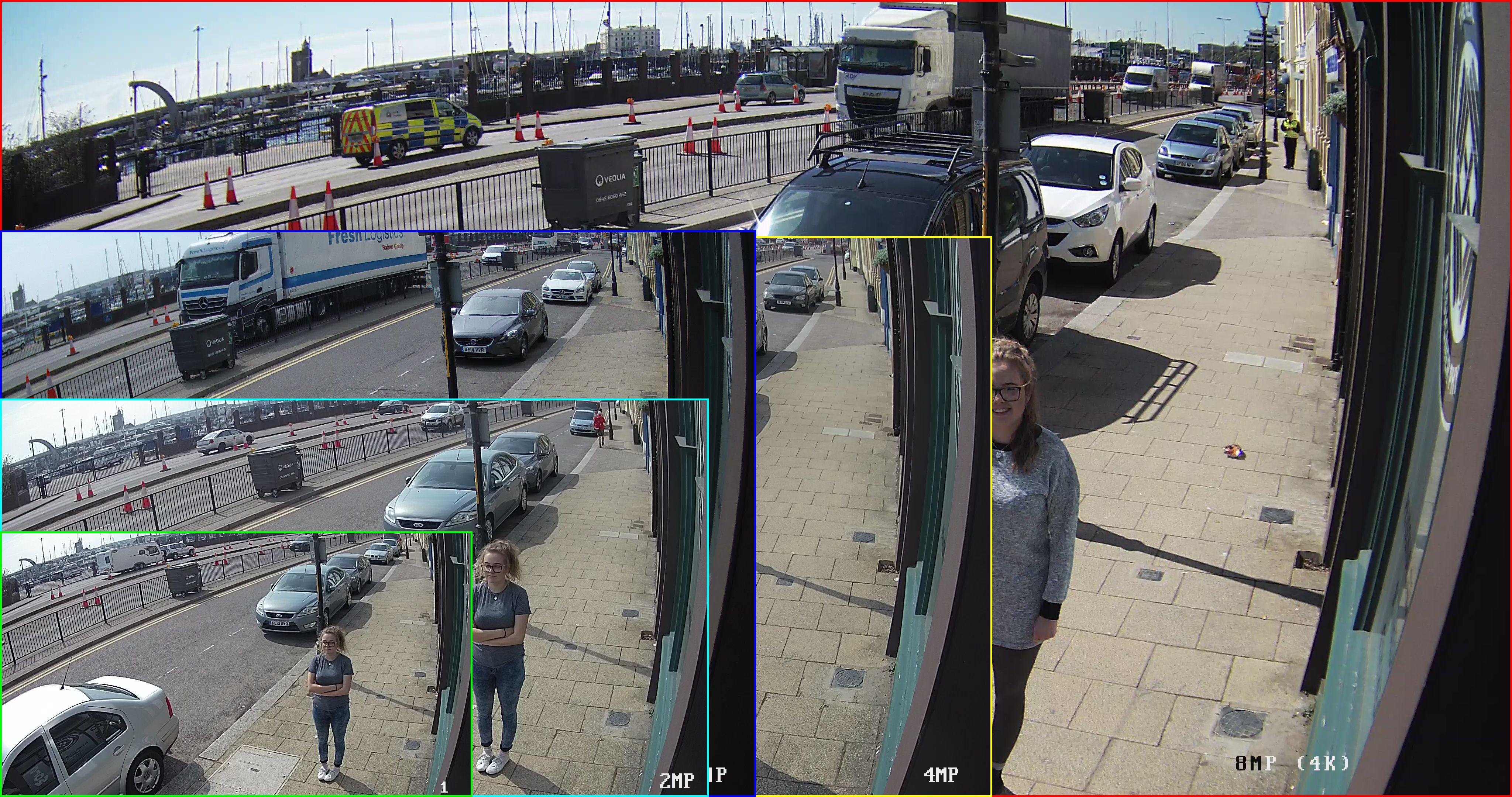
Making the Right Choice
For general surveillance, a 4MP camera offers a great blend of image quality and cost-effectiveness. The resolution is a significant improvement over standard HD cameras and is suitable for most residential and commercial applications.
However, if you require the highest level of detail for a large area or need to be able to zoom in on specific details like faces or license plates, an 8MP camera provides superior performance.
At Zions Security, we’re here to help you make the best choice. Our experts can assess your security needs, budget, and property layout to recommend the perfect camera system for you.
Ready to find the perfect camera? Contact us for a free security consultation or shop our selection of 4MP, 8MP, and other security cameras today.
Frequently Asked Questions (FAQs)
Q: How much storage space do 4MP and 8MP cameras need?
A: The storage space required is directly related to the resolution and video compression. An 8MP camera generates roughly twice the data of a 4MP camera. For example, a single 4MP camera recording continuously might require around 25 GB of storage per day, while an 8MP camera could require over 50 GB. Most modern cameras use H.265 compression, which helps to significantly reduce these file sizes. To manage storage, you can use a larger hard drive in your NVR or switch to motion-activated recording instead of 24/7 continuous recording.
Q: Do I need a special network or cables for 8MP cameras?
A: For a wired setup, most modern IP cameras use Power over Ethernet (PoE) technology, which sends both data and power over a single Ethernet cable. A high-quality Cat5e or Cat6 cable is more than sufficient for both 4MP and 8MP cameras, as they can handle the necessary data bandwidth over typical home and business distances.
Q: Does higher resolution mean better night vision?
A: Not necessarily. A camera’s night vision quality depends more on its sensor size, lens aperture, and infrared (IR) LED capabilities than on resolution alone. While an 8MP camera captures more total pixels, a 4MP camera with a larger sensor can often perform better in low-light conditions because its larger pixels can absorb more light. It’s crucial to check the specific camera’s “low-lux” rating and read reviews to assess its night vision performance.
Q: What is the difference between digital zoom and optical zoom?
A: This is a key distinction. Digital zoom simply crops and enlarges a portion of the image. The higher resolution of an 8MP camera allows for a more effective digital zoom because there are more pixels to work with before the image becomes too blurry. Optical zoom, found on varifocal or PTZ (Pan-Tilt-Zoom) cameras, uses a physical lens to zoom in on a subject. Optical zoom does not lose image quality and is the superior method for zooming in on distant details.
Q: Is 4MP or 8MP a good choice for a video doorbell?
A: For a video doorbell, a 4MP resolution is typically ideal. It provides an excellent wide-angle view of your front porch and street, with more than enough detail to identify a person or a package. An 8MP camera’s extra resolution would be less noticeable on a doorbell and would put a higher strain on your home network for live viewing.
Q: Can I mix 4MP and 8MP cameras on the same system?
A: Yes, as long as your NVR supports both resolutions. This can be a great way to save money by using 8MP cameras for critical areas and 4MP cameras for general surveillance.
Q: What is the minimum internet speed I need for an 8MP camera?
A: While live streaming over Wi-Fi is possible, a dedicated Ethernet cable is always recommended for a stable connection. For remote viewing, you will need adequate upload speed to view the high-resolution footage smoothly.
Originally Published: May 2, 2019 | Last Updated: September 17, 2025.
No Comments